From the learn something new every day bin, it turns out I bought too new of an alternator. The alternator I bought is a 160 amp Gen 4 for the loaded 2009 Escalade the engine came from originally. It came with a 2 pin plug which I noted, but thought GM must have simplified things to sense and excite pins, nothing else. Once I got to connecting the alternator I find I was totally wrong. Gen 3 and early Gen 4 used a 4 pin internal voltage regulator. After around 2005 GM switched to a 5 volt PWM controlled regulator (alternator I bought) that used an external control module to specify alternator voltage.
I should have ordered an alternator for a 2000 ish vehicle vs. 2009. Since I don't want to add a computer to drive my alternator and it's too late to swap it, I have ordered a $25 4 pin voltage regulator off Ebay and I need to pull my alternator apart and replace the voltage regulator.
The best info I find is at the link below, instructions for regulator swap out included.
Dirty Dingo Motorsports - Pages - LS Conversion Swap Information
This link provides more good info on both the Gen 3 & Gen 4 regulator operation.
Almost ALL the late GM Alternator Information you could need!!
Alternator excitation will be through the "Lamp" pin with a 470 Ohm, 10 Watt resistor back to the ignition switch (Watt size is overkill).
Alternator "Sense" will route to the Starter.
Welp, here we go.


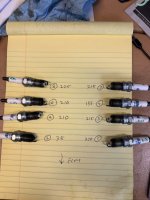
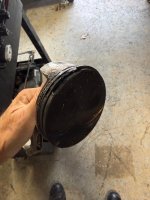
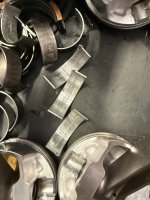
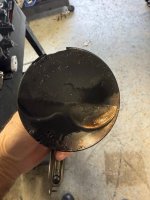
Pistons are forged, none shattered piston and the engine didn't seize up, 2 hours of run time after failure with lot's of blow by out the catch can. The piston in my hand was the primary failure. The bench shot shows the crank bearings starting to score. The bores have since gotten an 0.005 over bore/hone for clean up.Welp, looking at the detonated piston, then the busted one on the bench just kinda reminds me of a term I've used, "blueprint",,,, that engine was set up for a "luxury car" so the tolerances were set tight to keep the noise down while being a cruise vehicle and not a tow truck, I don't see any black death under the ring lands of the shattered piston, much less on the detonated piston in your hand so, the theory of "choking" it down is correct, the rings got superheated, closed the gap and seized in the bores to break the lands and the blowby added to the torching.

Apparently the LS wants to breath and I need to tune for 6K RPM minimum on the trailer.
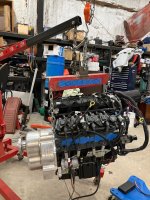
The plan is this engine is being rebuilt and pickled for a year or two so my son and I can focus on the hull it is destined for. Prop for that boat remains TBD. In the meantime, all of the accessories, starter, flex plate, 2.68 gearbox and 3 blade WW EX are moving over to an iron 6.0 and back on the boat this engine was on.SG is the plan just to remove pitch and use same prop? Less than 20 degrees is where you may end up to be 6K+
The user is planning to build a high-performance L92/LS3 engine with a 4.00" stroke for an airboat. Key goals include 450-500 HP at 5,500 RPM, strong low-end torque starting below 3,000 RPM, forged internals, EFI, and upgraded injectors. They are seeking advice on components like the valve train, cam, porting, and ECU options (mentioning Holley), while prioritizing low-end torque over top-end power. Research includes following recommended bearing clearances of 0.0025" from other forum threads.
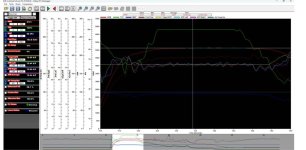
Really curious as to how the tune looked as far as timing. I have a similar setup that is choked down and we have held it to the floor longer than I’d like to admit.For good measure I clicked the AI summary. Seems reasonable enough to decide if I want to read 9 pages or not![]()
Really curious as to how the tune looked as far as timing. I have a similar setup that is choked down and we have held it to the floor longer than I’d like to admit.![]()
Yep.I would venture to say that the knock sensors are kinda critical with the safe tune of the engine, having true delco or Delphi units, what else curbs the timing back when a spark knock is present running a high performance engine as a "tow truck" over loaded up a mountain and not detonate?
having true delco or Delphi units, what else curbs the timing back when a spark knock is present